



The Swiss Museum for the Blind in Zollikofen: What Happens When You Can’t Rely on Your Sight?
In this post, I’d like to share with you not just the usual travel tip, but an experience that made me reflect and see the world through slightly different eyes. Or perhaps I should say—to try to perceive it even without them. Thanks to my company’s pre-Christmas trip, I found myself in a place that may not be on Switzerland’s list of most famous tourist attractions, but is definitely worth a visit. I visited the Swiss Museum for the Blind (Das Schweizerische Blindenmuseum – anders sehen) in Zollikofen, not far from Bern. The museum sits on the grounds of a school for blind and visually impaired children and youth and offers something a little different from traditional museum exhibits. Here, it’s not just about what you see. Quite the opposite. It’s about what you can perceive when you can’t rely on your sight.
The Swiss Museum for the Blind in Zollikofen
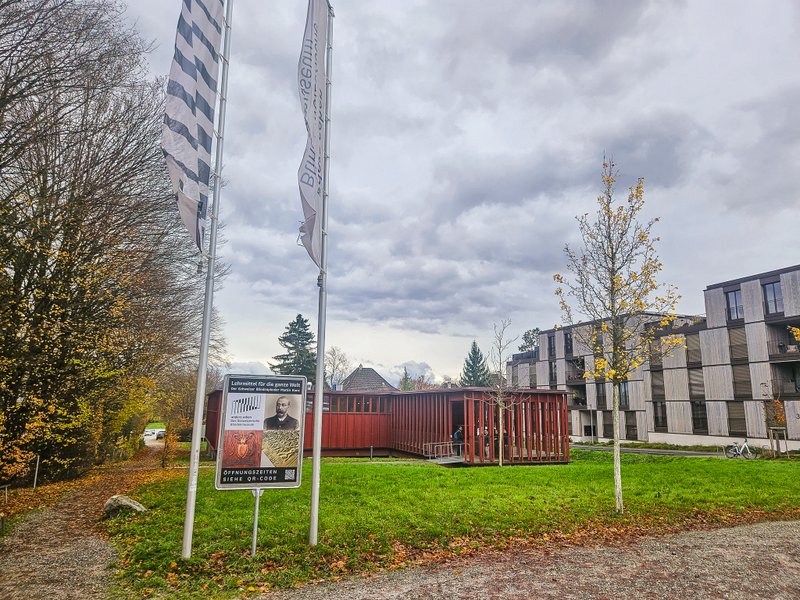
The museum is located in the town of Zollikofen, just a few kilometers north of Bern. It is part of the Blindenschule Zollikofen complex, a school for children and young people with visual impairments. The Swiss Museum for the Blind was founded by Theodor Staub (1864–1960). His collection was transferred to Zollikofen in 1961 and became the foundation of today’s exhibition. In 2012, the exhibition anders sehen opened, followed by the new museum. The new pavilion was completed at the end of 2020, but the pandemic delayed its official opening until June 2021. As early as 2022, the museum received the prestigious European Special Commendation as part of the European Museum of the Year Award. The jury particularly praised its innovative and inclusive approach to presenting the 200-year history of education for the blind.
Unlike most museums, however, you cannot visit at any time. The museum is open to the public only on select dates, and you must book group visits, guided tours, and workshops in advance.
Where is the museum located, and how do you get there?
Address: Höheweg 10, 3052 Zollikofen. There is also a wheelchair-accessible parking lot right next to the museum. By public transportation: From Bern, take the train to Zollikofen station, then take bus 106 to the Zollikofen, Blindenschule stop. The museum is about 200 meters from the bus stop. If you’d like to walk, or if you miss the bus, a brisk walk from the station will get you to the museum in under 15 minutes.
Museum Tour: Four Rooms, Four Different Experiences
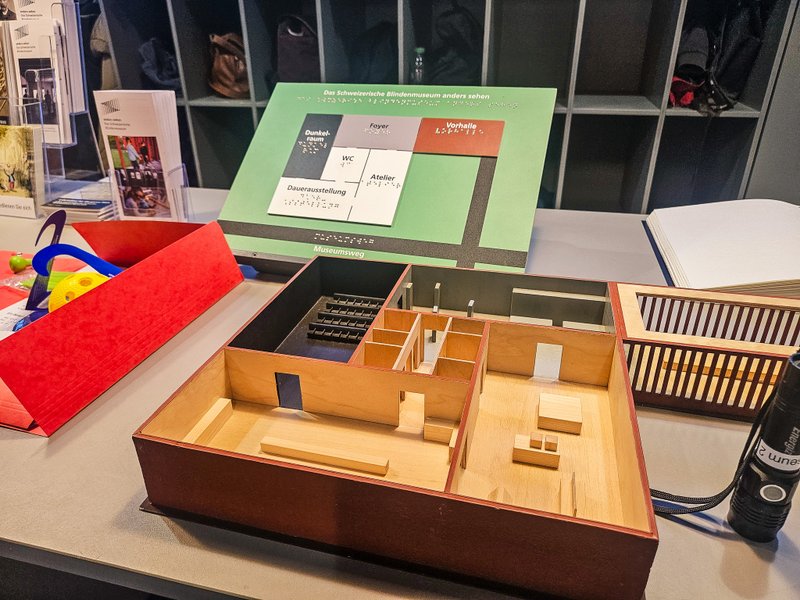
The museum itself isn’t very large. When you enter, you might be surprised by how simply the entire space is laid out. Beyond the entrance hall are four main sections: the foyer, the dark room, the permanent exhibition, and the studio. Upon entering, you’ll receive a tablet and headphones to guide you through the exhibition.

Foyer
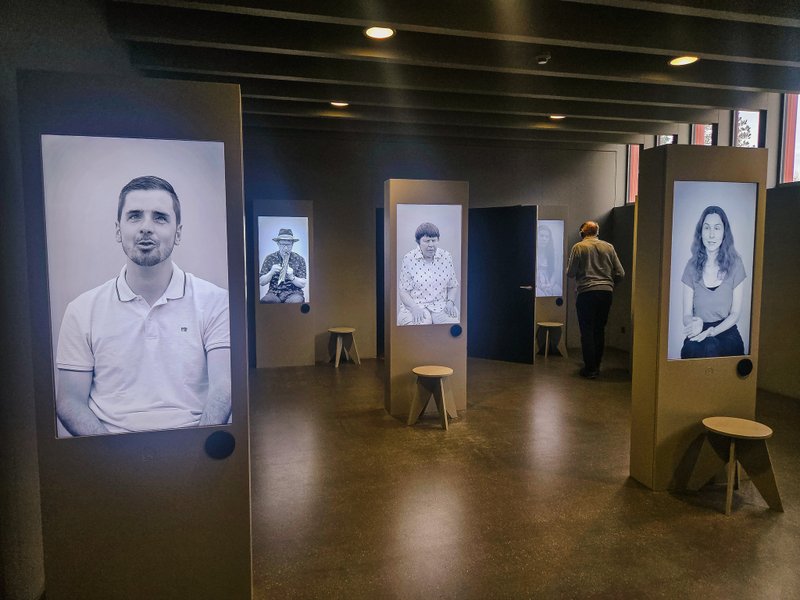
Foyer is deliberately designed in muted shades of gray so individual contours and contrasts recede into the background, allowing visitors to begin to realize how important color and light are to our everyday perception of space. The foyer features six video portraits of people with visual impairments. Through their personal stories, you’ll learn what their daily lives are like, what obstacles they face, and how they perceive the world around them.
The Dark Room: Thirteen Minutes in Total Darkness
You enter a room that will be completely dark once the door closes. You sit down in a chair and, for about thirteen minutes, listen to an audio recording that takes you through a typical day in the life of a 13-year-old girl attending a school for the blind in Zollikofen. The story begins at home in the morning. You learn, for example, how important it is to keep everything in its place in the kitchen so a person with a visual impairment can find things by touch without trouble. Then, together with the girl, you set off for school.
You hear her footsteps, feel changes in the surface beneath her feet, and hear the sounds of the surroundings. You realize how much information a blind person can gather with a white cane, how important it is to know the route they travel regularly, and how complicated it can be when an obstacle appears on a familiar route—such as a temporary construction site. And then comes the train station. The sounds of trains, announcements, footsteps, people’s voices, and other noises that we hardly notice during our daily commutes suddenly merge into an incredibly intense soundscape that will completely overwhelm you. The auditory journey continues on the train ride to school. But the experience doesn’t end there.
Now you have to on your own find your way out of the room. And all while in complete darkness. You have to get from your chair to the wall, feel your way to the handrail, and follow it toward the exit. Along the way, you’ll encounter various objects and obstacles related to the story you’ve just heard. For example, you might feel a drawer filled with mugs and bowls or come across a makeshift construction site. It was truly an experience.
Outside, we could ask our guide, Silvie, anything that interested us.
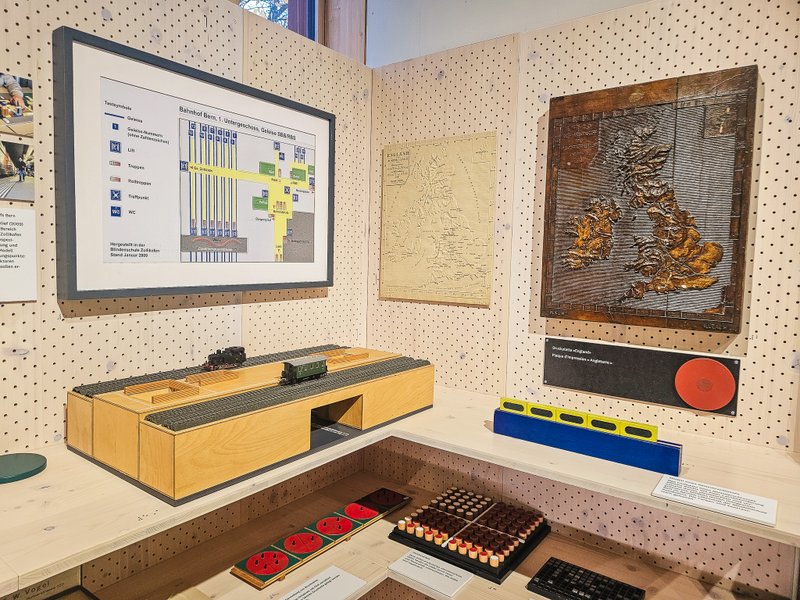
For example, we learned that, with experience and training, people with visual impairments can develop their auditory perception to the point that they can listen to audio messages even at a significantly accelerated pace. Or that special three-dimensional models of train stations are created for them, allowing them to familiarize themselves with the layout in advance through touch. People with visual impairments also take a school course called Orientierung und Mobilität (O&M), where they learn to move around independently and safely, navigate public transportation, and handle a wide variety of everyday situations.
Exhibition Hall: Two Hundred Years of Education for the Blind
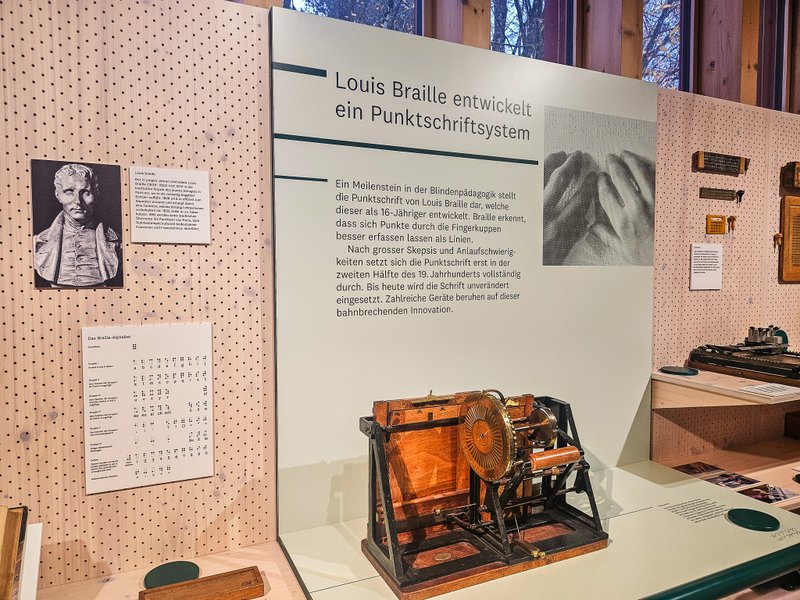
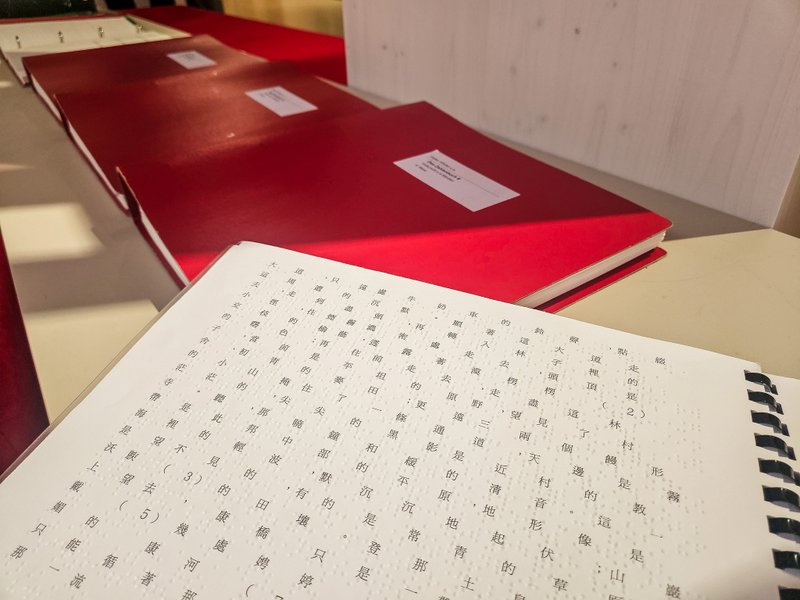
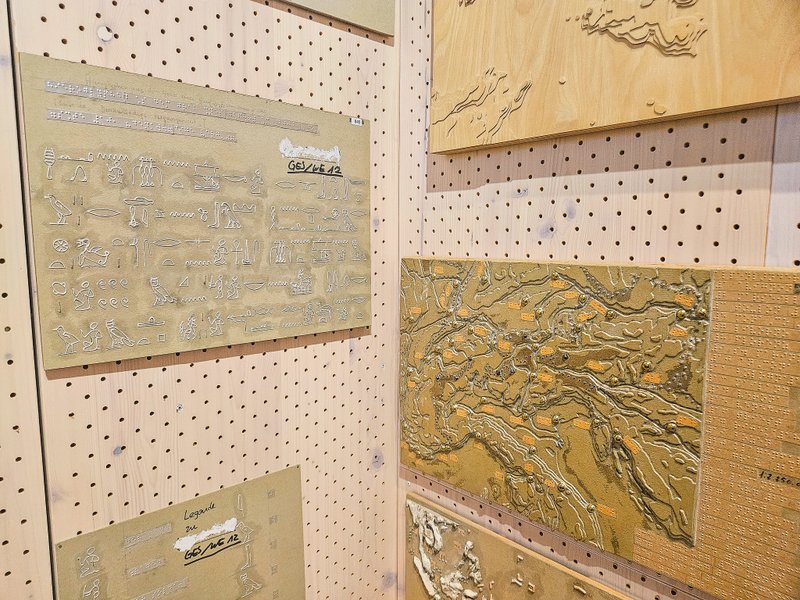
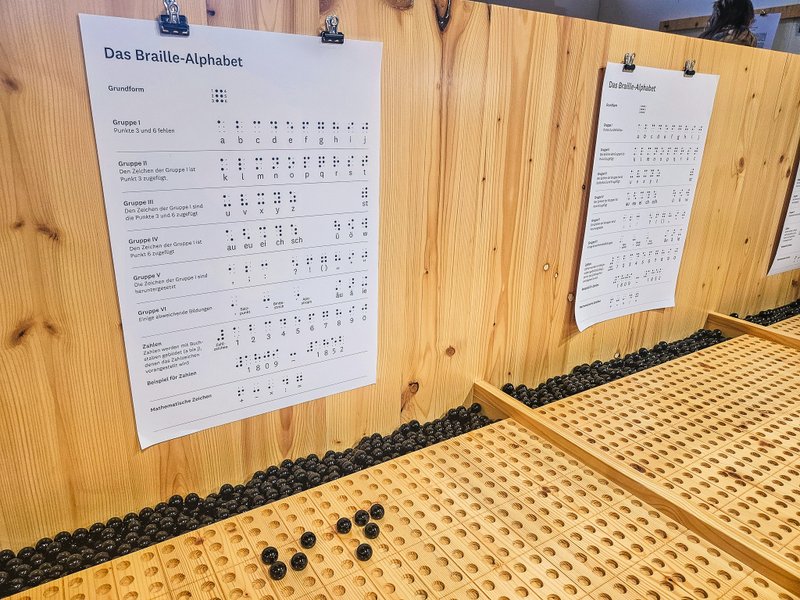
After an intense experience in the dark room, the tour continues through the permanent exhibition. It presents approximately 200 years of the history of education for blind and visually impaired people. In the exhibition, you’ll learn about assistive devices, historical artifacts, teaching materials, and technologies that make everyday life easier for people with visual impairments. One of the six sections is also dedicated to Louis Braille, the creator of the famous six-dot writing system. Braille himself lost his sight as a child following an accident in his father’s workshop. His invention later fundamentally changed educational opportunities and the ability of blind people to live independently. Braille is used in many languages worldwide. It uses six raised dots, and individual characters are formed through various combinations of these dots. Although the specific characters and rules differ from language to language, the basic principle remains the same. At the museum, you can also see, for example, a Chinese book in which standard text is supplemented with Braille.
The current special exhibition, Lehrmittel für die ganze Welt, runs from August 2026 to May 2027. It showcases Martin Kunze as a pioneer in producing embossed educational materials for the blind.
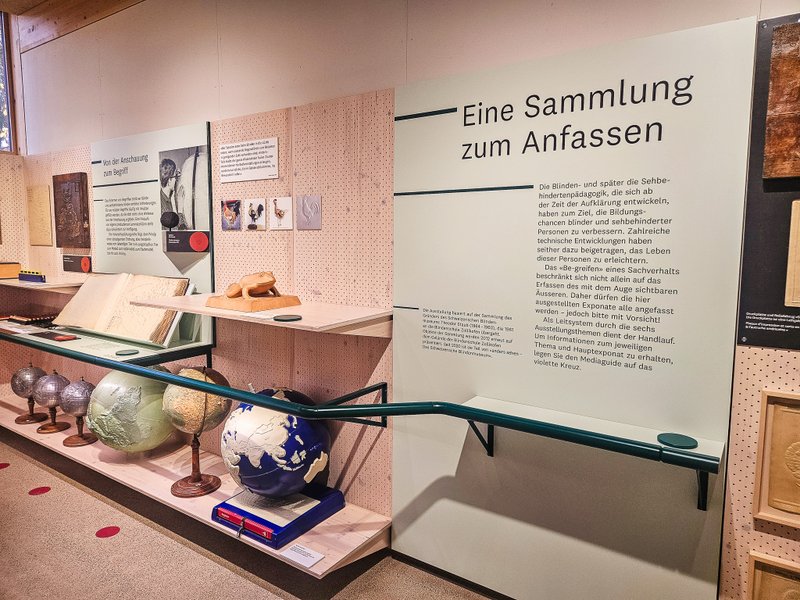
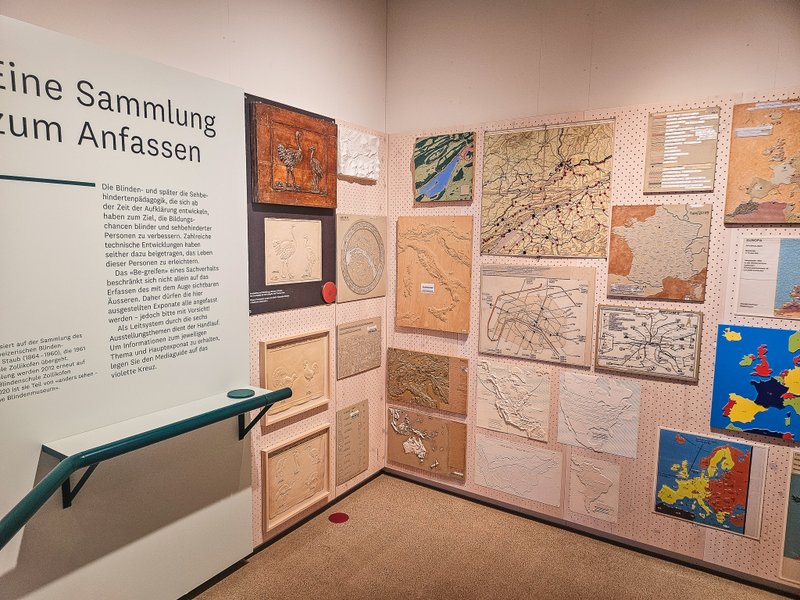
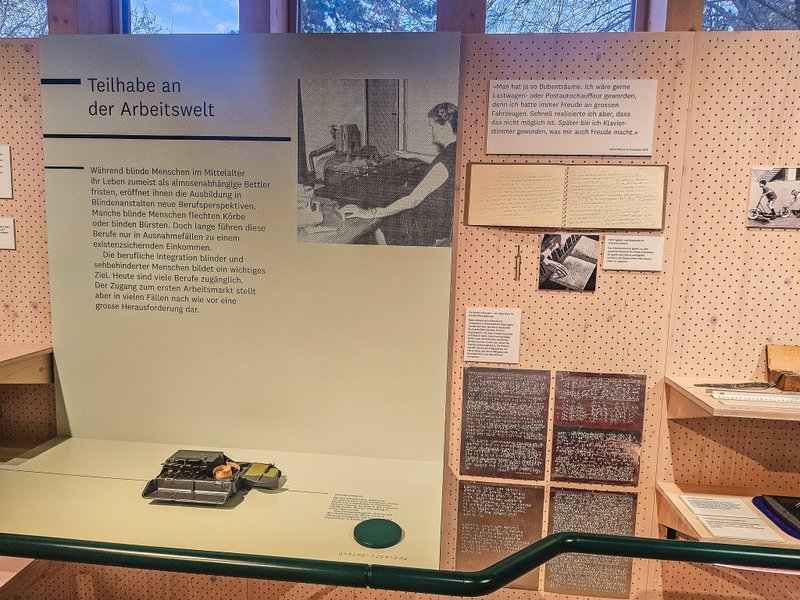
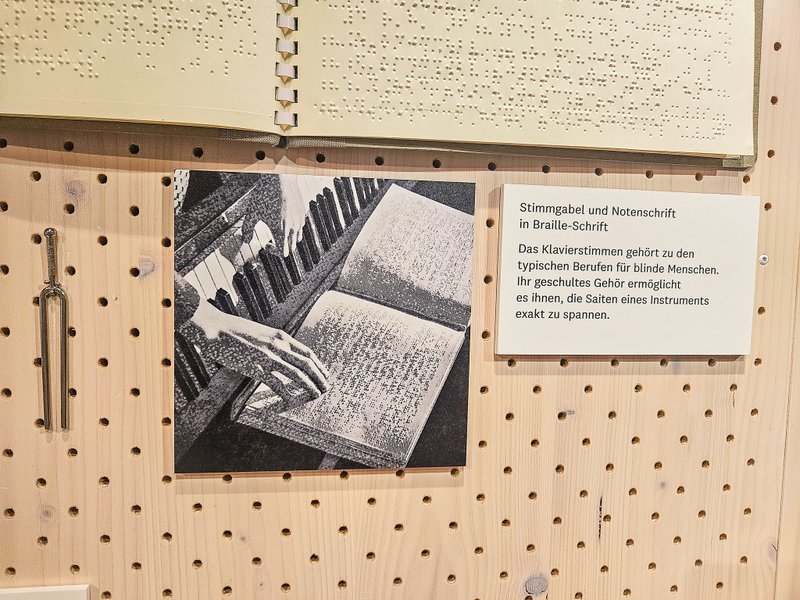
Another interesting part of the exhibition focuses on employment opportunities for people with visual impairments. In the Middle Ages, blind people were often forced to beg, but education gradually opened new job opportunities for them. Traditionally, they engaged in activities such as basket weaving or brush making—crafts that rely heavily on touch. Today, their options are much broader. Thanks to modern technology, people with visual impairments can work in administrative roles, for example, but they can also find employment in professions that require a well-developed sense of hearing, such as piano tuning. Nevertheless, finding a job in the general labor market often remains a major challenge for them.
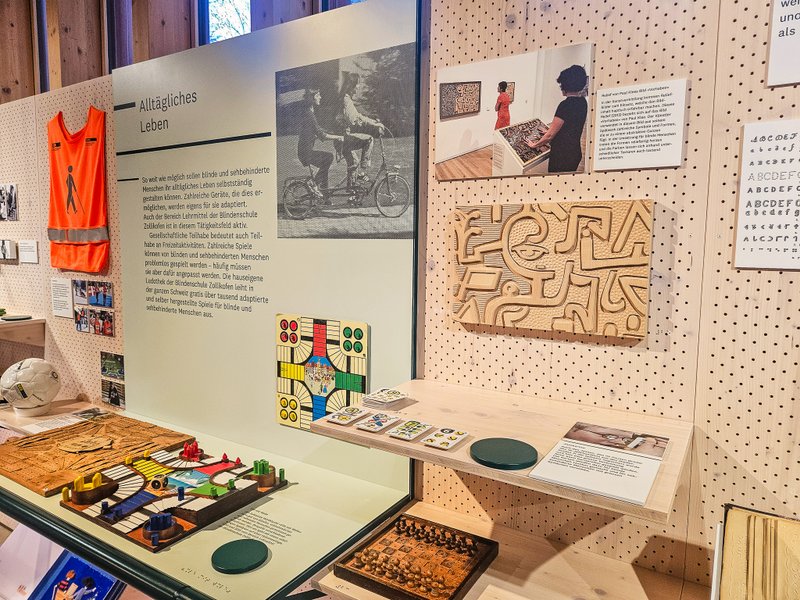
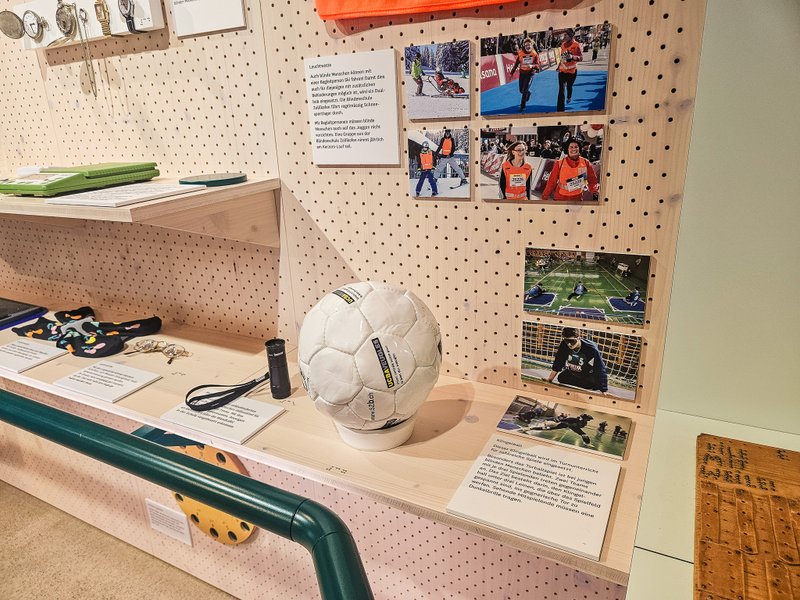
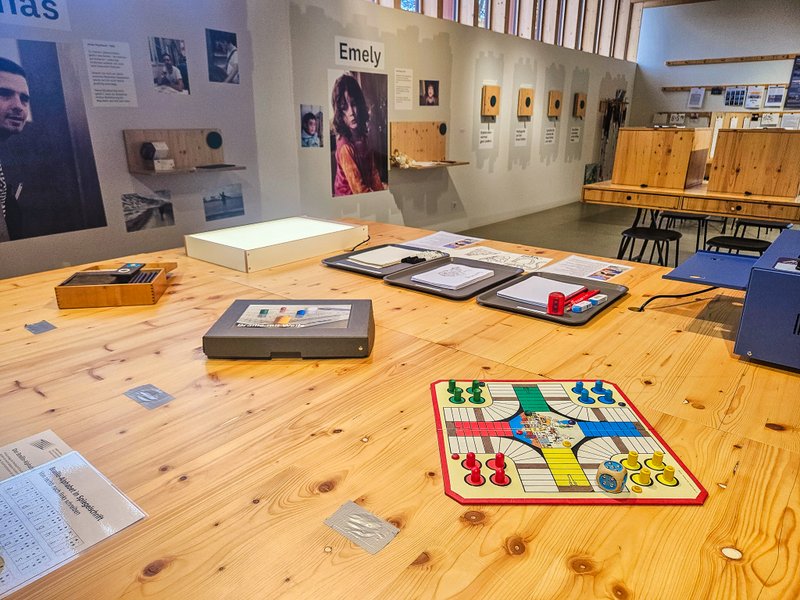
I was also intrigued by the exhibition section dedicated to everyday objects, sports, and leisure activities. Did you know, for example, that there’s a special soccer ball (Klangball) that makes sounds when it moves, so players can navigate by sound? Or that people with visual impairments can also play board games such as Ludo, cards, or chess? These are, of course, specially adapted. The game pieces have different shapes, the squares can be distinguished by touch, and some game elements feature Braille. At the museum, you can see a wide range of such aids, from historical to modern. The school in Zollikofen also runs its own game lending library (Ludothek), which lends out more than a thousand specially adapted or handmade games for the blind and visually impaired throughout Switzerland free of charge.
Studio: Now Try It Yourself!
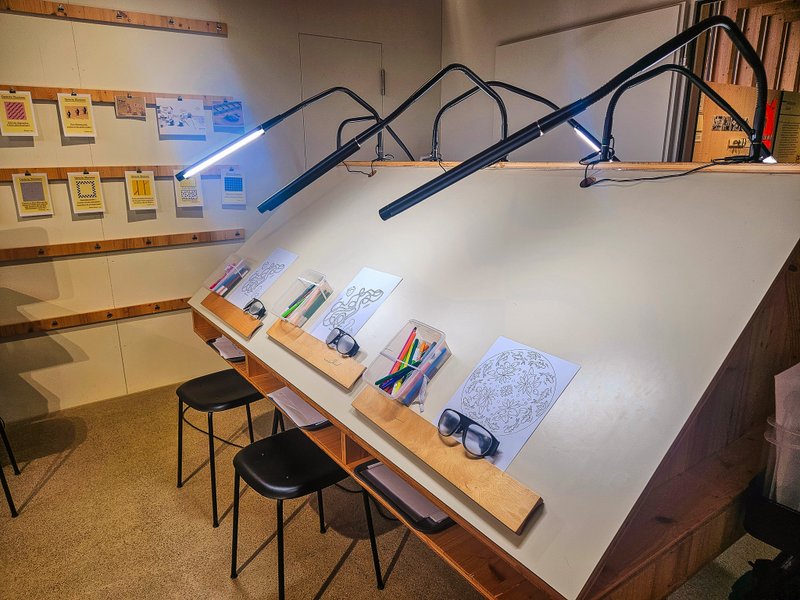
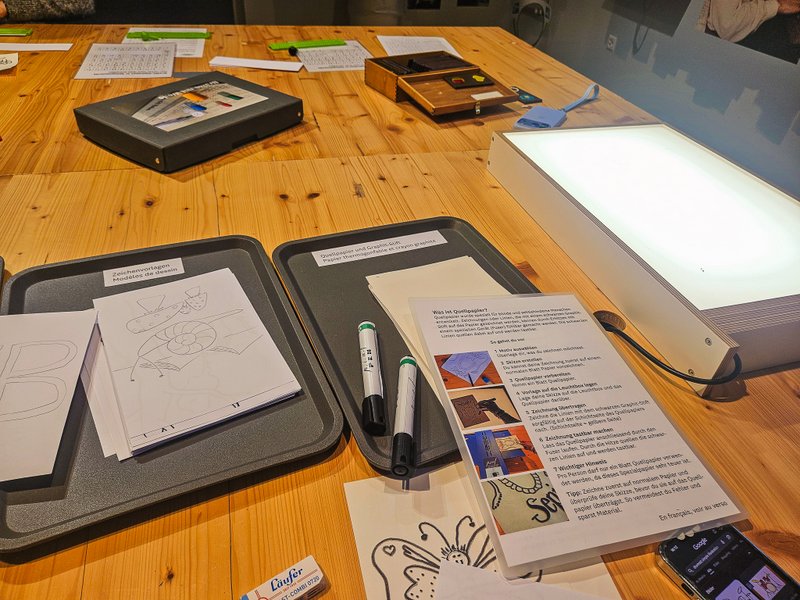
The final section of the museum is the studio, where you can experience firsthand some of the activities that people with visual impairments perform every day. For example, you can put on special simulation goggles that significantly limit your vision and try to color a picture. Or you can try a tactile game where a partner hands you various objects, and you identify them based solely on their shape and texture. I was also intrigued by the opportunity to try out a special Braille typewriter. If you’re curious about how six-dot Braille works, you can spell your own name on a special board using small beads that represent individual dots.
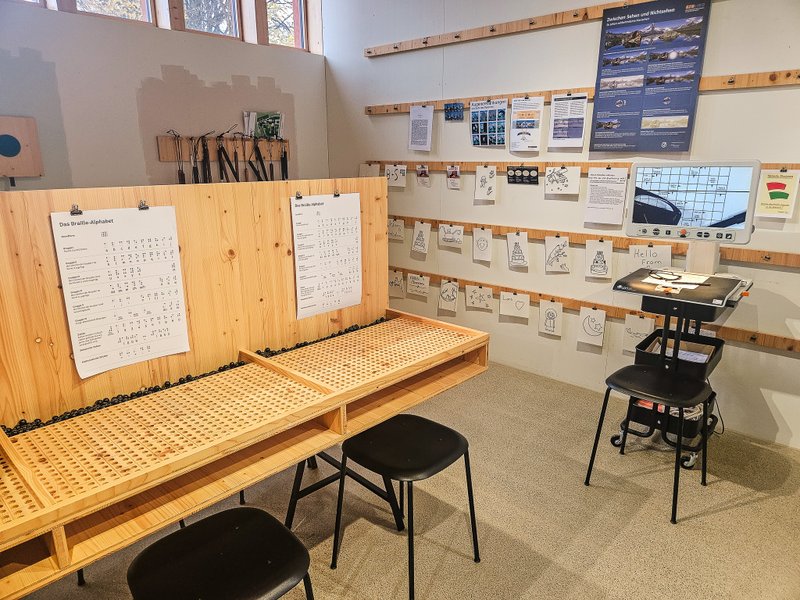
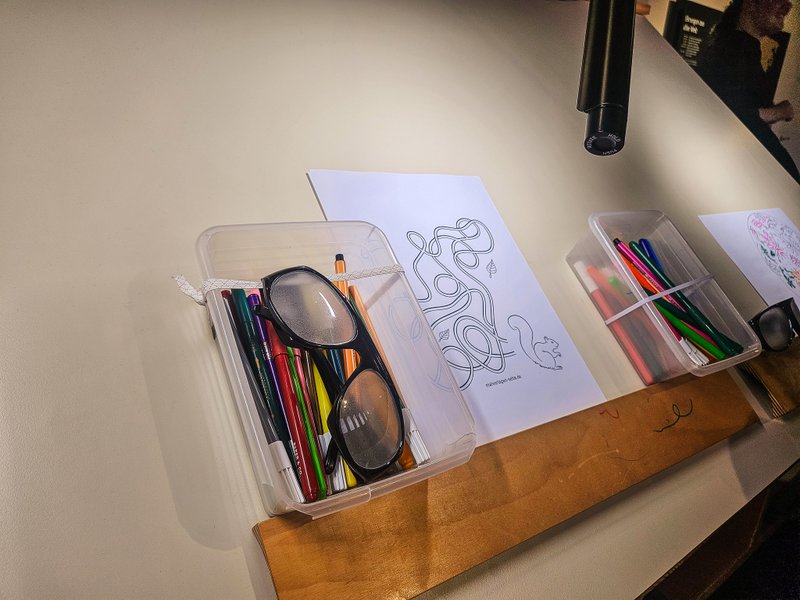

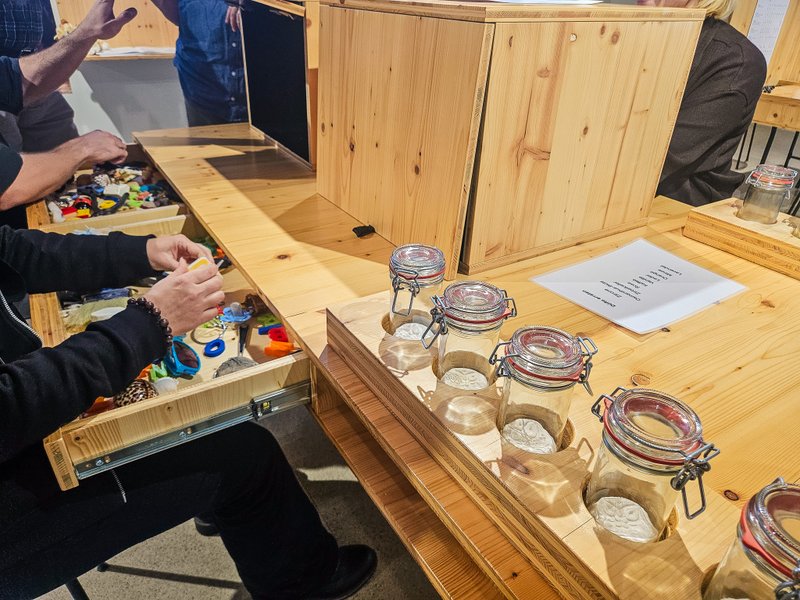
Another interesting activity is creating tactile images using special paper and drawing tools. The studio is a place where you can calmly touch and try everything out—and, most importantly, gain a better understanding of the various ways to learn about the world around us. Here, too, you can use headphones with an audio guide to learn more interesting facts.

Is a visit to the Swiss Museum for the Blind worth it?
In my opinion, definitely yes. The power of this museum lies not in the number of exhibits on display, but in the experiences it offers—experiences that let you, at least for a moment, step outside your own way of perceiving the world. Of course, thirteen minutes in complete darkness can’t show you what it’s really like to live with a visual impairment. But it can make you reflect on things you normally don’t notice or take for granted—like walking to the train or making breakfast. That’s why my visit to the museum left a much stronger impression on me than I expected.
I would recommend the museum especially to school classes, work teams, or groups looking for a slightly different shared experience.
Hours and Admission
The museum is open to individual visitors on select afternoons, usually from 2:00 p.m. to 5:00 p.m. Please check the museum’s website for current dates. Tours and workshops can be booked based on availability in the museum’s calendar.
Admission for individuals:
- Adults: 10 CHF
- Children ages 6 to 15: 5 CHF
- Family admission: 25 CHF
- Students and seniors: 5 CHF
Guided tour for groups: 75 CHF for 1.5 hours plus individual admission fees. The tour is designed for 5-25 people. Larger groups require two guides.
Workshop for school classes: 300 CHF for a three-hour program, up to 25 students, with at least one accompanying teacher.
Team-building: approximately 50 CHF per person for a three-hour program for groups of 3 to 30 participants.





I am a member of


Map of activites

Podcast

You may be also interested in
Social Media
Categories
Subscribe